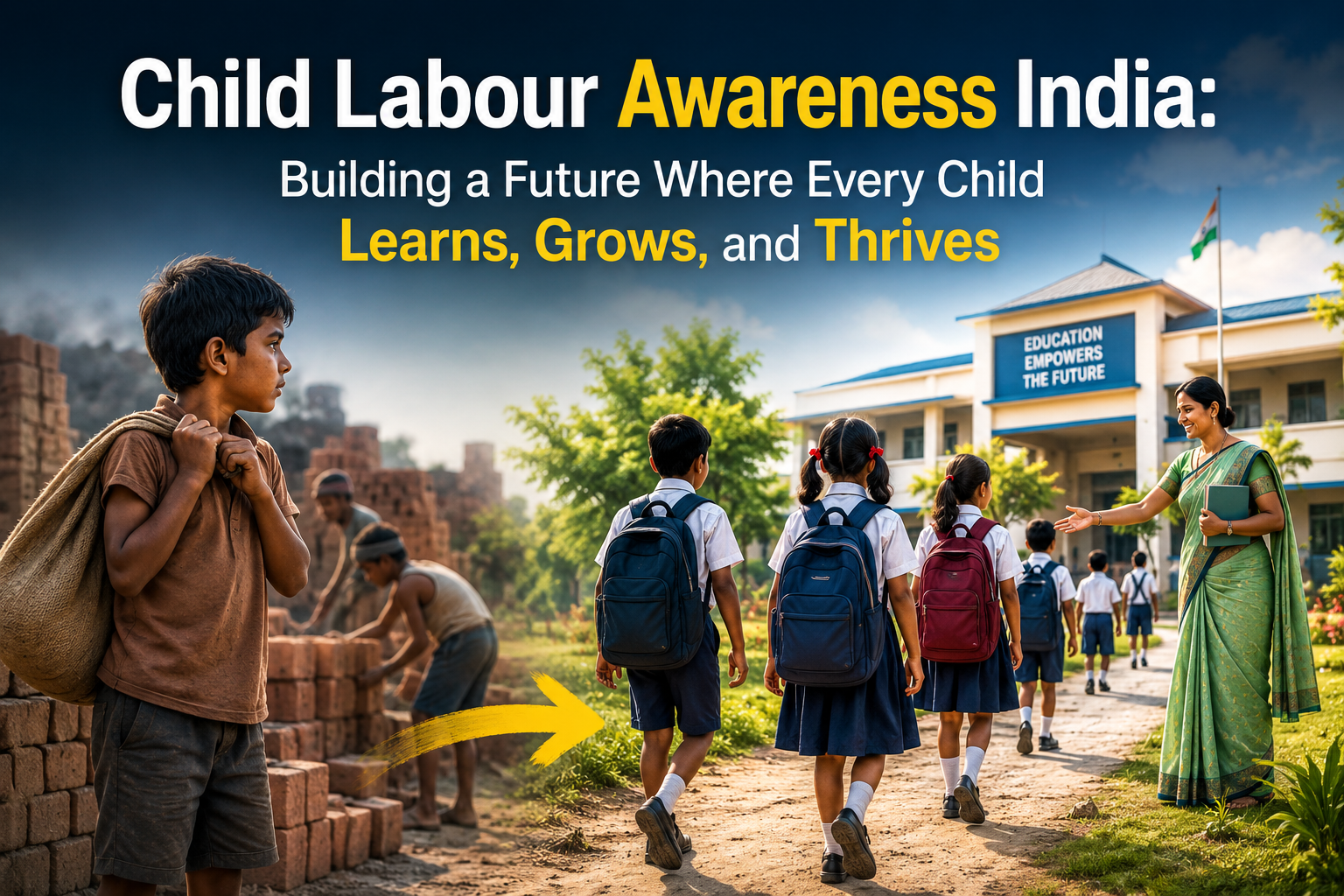
Children are meant to learn, dream, play, and discover the world around them. However, millions of children across the country continue to spend their childhood working instead of attending school. Therefore, the need for Child Labour Awareness India has never been greater. While India has made significant progress in reducing child labour, the issue still affects countless families, communities, and children who deserve better opportunities.
At Yes We Can India, we believe that every child deserves access to education, protection, and a nurturing environment. Moreover, raising awareness about child labour is one of the most effective ways to create lasting change. When communities understand the harmful effects of child labour, they become more willing to support education and child welfare initiatives.
In addition, awareness helps identify vulnerable children before they become trapped in exploitative work environments. Therefore, this blog explores the causes, consequences, legal framework, and solutions surrounding child labour while highlighting the importance of Child Labour Awareness India in building a brighter future.
Understanding Child Labour in India
Child labour refers to the employment of children in work that deprives them of their childhood, education, health, and overall development. Furthermore, child labour often forces children to work long hours in hazardous conditions that can negatively affect their physical and mental well-being.
According to various studies and reports, children are often found working in agriculture, manufacturing, domestic work, construction sites, roadside businesses, and informal sectors. Moreover, many children remain hidden from official records because they work in family businesses or unregulated environments.
Therefore, child labour awareness campaigns play a crucial role in helping society recognize and address this issue. When communities understand what constitutes child labour, they become better equipped to report violations and support affected children.
Why Child Labour Awareness India Matters
Awareness is the first step toward change. Without awareness, communities may unknowingly accept child labour as a normal part of life. However, when people understand its long-term consequences, they are more likely to take action.
Child Labour Awareness India is essential because it:
- Educates communities about children’s rights.
- Encourages school enrollment and attendance.
- Reduces social acceptance of child labour.
- Promotes reporting of illegal employment practices.
- Supports government and NGO initiatives.
- Helps vulnerable families access support systems.
Moreover, awareness creates a culture of accountability. As a result, employers, communities, educators, and families become active participants in protecting children.
Major Causes of Child Labour in India
Understanding the root causes is essential for developing effective solutions. Therefore, awareness programs must focus on educating communities about the factors that contribute to child labour.
1. Poverty
Poverty remains one of the leading causes of child labour. Many families struggle to meet their daily needs. Consequently, parents may depend on their children’s income to support household expenses.
Moreover, children from economically disadvantaged backgrounds often face pressure to contribute financially. Therefore, poverty reduction programs are critical components of Child Labour Awareness India initiatives.
2. Lack of Access to Education
Education is one of the strongest tools against child labour. However, many children lack access to quality schools, learning resources, and supportive educational environments.
Furthermore, when education becomes inaccessible or unaffordable, children are more likely to enter the workforce. Therefore, strengthening educational infrastructure is essential for preventing child labour.
3. Social and Cultural Factors
In some communities, child labour is viewed as a normal part of growing up. Moreover, traditional beliefs may encourage children to learn family trades instead of pursuing education.
As a result, awareness campaigns must challenge these perceptions and promote the importance of formal education and child rights.
4. Migration and Displacement
Many families migrate in search of employment opportunities. Consequently, children often drop out of school and become vulnerable to labour exploitation.
Furthermore, displaced families may lack access to social services and educational support. Therefore, targeted interventions are necessary to protect migrant children.
5. Lack of Awareness
Ironically, lack of awareness itself contributes significantly to child labour. Many parents are unaware of legal protections, educational opportunities, and government schemes available to support children.
Therefore, Child Labour Awareness India programs are essential for educating families and communities about available resources.
The Impact of Child Labour on Children
Child labour affects every aspect of a child’s life. Moreover, its consequences often continue well into adulthood.
Educational Consequences
Children involved in labour often miss school or drop out entirely. Consequently, they lose opportunities to develop essential skills and knowledge.
Furthermore, limited education reduces future employment opportunities and perpetuates cycles of poverty. Therefore, promoting education remains a central goal of child labour prevention efforts.
Physical Health Risks
Many child labourers work in hazardous environments. For example, they may be exposed to chemicals, heavy machinery, dust, or dangerous working conditions.
As a result, children can suffer from injuries, chronic illnesses, and developmental problems. Moreover, long working hours can lead to exhaustion and malnutrition.
Mental and Emotional Effects
Child labour often places immense stress on children. Furthermore, many experience anxiety, fear, isolation, and emotional trauma.
Consequently, their self-esteem and psychological well-being may suffer. Therefore, rehabilitation and counseling services are often necessary components of support programs.
Social Impact
Children engaged in labour frequently miss opportunities for social interaction, recreation, and personal development. Moreover, they may become disconnected from peers and educational environments.
As a result, their overall development is significantly hindered.
Child Labour Laws and Policies in India
India has established several legal protections to combat child labour. Moreover, these laws aim to safeguard children’s rights and promote education.
Child and Adolescent Labour (Prohibition and Regulation) Act
This legislation prohibits the employment of children below the age of 14 in most occupations. Furthermore, it regulates the employment of adolescents in hazardous occupations.
Therefore, awareness of these legal protections is an important aspect of Child Labour Awareness India initiatives.
Right to Education Act
The Right to Education Act guarantees free and compulsory education for children between the ages of 6 and 14 years. Consequently, it serves as a powerful tool in preventing child labour.
Moreover, educational access reduces children’s vulnerability to exploitation.
Juvenile Justice Act
The Juvenile Justice framework provides additional protections for children facing abuse, neglect, or exploitation. Therefore, it strengthens the overall child protection system.
The Role of Education in Ending Child Labour
Education remains one of the most effective solutions to child labour. Furthermore, it empowers children with knowledge, skills, and opportunities for future success.
Schools provide:
- Safe learning environments.
- Social development opportunities.
- Access to support services.
- Improved career prospects.
- Protection from exploitation.
Moreover, educated children are more likely to break cycles of poverty and contribute positively to society. Therefore, increasing school enrollment is a key objective of Child Labour Awareness India programs.
How NGOs Contribute to Child Labour Awareness India
Non-governmental organizations play a vital role in combating child labour. Moreover, they often reach communities that may not have easy access to government services.
Organizations such as Yes We Can India contribute by:
- Conducting awareness campaigns.
- Supporting educational initiatives.
- Identifying vulnerable children.
- Connecting families with welfare schemes.
- Promoting child rights.
- Encouraging community participation.
Furthermore, NGOs often collaborate with schools, local authorities, and community leaders to maximize impact.
Community Participation: A Powerful Solution
Communities are essential partners in preventing child labour. Therefore, awareness campaigns should encourage active participation from all stakeholders.
Community members can:
- Report suspected child labour cases.
- Encourage school attendance.
- Support vulnerable families.
- Participate in awareness events.
- Advocate for children’s rights.
Moreover, collective action creates lasting social change and strengthens child protection systems.
How Parents Can Help Prevent Child Labour
Parents play a critical role in shaping children’s futures. Therefore, empowering parents through education and support is essential.
Parents can:
- Prioritize education.
- Seek government assistance programs.
- Participate in community awareness sessions.
- Encourage children’s aspirations.
- Avoid sending children into unsafe work environments.
Furthermore, informed parents become strong advocates for their children’s rights and development.
Raising Child Labour Awareness India Through Digital Platforms
Technology has transformed the way awareness campaigns reach people. Moreover, digital platforms provide opportunities to engage wider audiences.
Effective digital awareness strategies include:
- Educational blogs and articles.
- Social media campaigns.
- Online workshops.
- Community storytelling initiatives.
- Awareness videos.
- Interactive educational resources.
Consequently, digital outreach has become an important component of Child Labour Awareness India efforts.
The Road Ahead
Eliminating child labour requires a united effort from governments, NGOs, schools, businesses, communities, and families. Moreover, sustainable change depends on consistent awareness, education, and support systems.
While progress has been made, significant work remains. Therefore, every individual has a role to play in protecting children’s rights and ensuring access to education.
At Yes We Can India, we believe that every child deserves the opportunity to learn, grow, and succeed. Moreover, through collective action and continued commitment to Child Labour Awareness India, we can create a future where every child enjoys a safe, healthy, and fulfilling childhood.
Ultimately, ending child labour is not merely a legal obligation. Rather, it is a moral responsibility shared by all of us. Therefore, by raising awareness, supporting education, and empowering communities, we can build an India where every child has the chance to achieve their full potential.
FAQs - Child Labour Awareness India
Child labour refers to work that deprives children of their education, health, safety, and overall development. Moreover, it prevents children from enjoying their fundamental rights and opportunities.
Child Labour Awareness India helps educate communities about children’s rights, promotes education, and encourages action against exploitation.
The major causes include poverty, lack of education, migration, social norms, and limited awareness about child rights and welfare programs.
Education provides children with opportunities for personal growth, skill development, and future employment. Therefore, it reduces the likelihood of children entering the workforce prematurely.
India has several legal protections, including the Child and Adolescent Labour (Prohibition and Regulation) Act, the Right to Education Act, and the Juvenile Justice Act.
Communities can report violations, support school attendance, participate in awareness campaigns, and advocate for children’s rights.
NGOs conduct awareness programs, support education initiatives, connect families with resources, and advocate for stronger child protection systems.
Individuals can support educational programs, spread awareness, volunteer with NGOs, and report suspected cases of child labour to appropriate authorities.